The London Library AGM | 26 November 2024
Director’s Speech Notes
Thank you, Simon and good evening everyone. Thank you for joining us. It is wonderful to see so many of you here this evening and joining online.
2023/24 was the sixth and final year of our Strategic Plan. Back in 2018 the Library’s membership had been declining for six consecutive years and was at a 33 year low. Financially, we were running an operating deficit of over £600k per year. The Library was under serious threat of closure, or at the very least a radical reduction in the scale of its collection and operations. In response, we launched our 6-year plan which had two key goals:
· Substantially increase awareness of, access to and engagement with the Library (increasing its reach and impact), and to
· Remove the annual operating deficit by the end of March 2024, placing the Library on a sustainable financial footing for future generations.
In support of those goals, our plan set out 8 strategic objectives, and I shall take you through each of those in turn. The first was to:
1) Raise our public profile to drive increased awareness, use and membership of the Library, while giving an additional focus to attracting and welcoming younger people here.
Awareness of the Library continues to rise. In the last year, our social media engagement was up with an average increase of 26% on all platforms. In particular, our growth in followers on Instagram rose by 90% along with 12-fold increase in engagement with our posts. The number of people subscribing to our email newsletter also increased to over 18,500, up from 17,000 last year and only 600 back in 2018.
Borrowing of our printed book stock has been steadily decreasing over the last 30 years. However, we bucked that trend this year by lending 60,000 printed books, up from 57,000 in the previous year. This is now at its highest level for
four years. In addition, we processed 33,000 requests to retrieve and set aside material for members, showing strong use of the book collection within the Library itself.
We had 62,000 member visits, up from 55,000 in the previous year and, again, our highest for four years.
20 years ago the Library loaned out 85,000 books per year, had 13,000 visits and provided 55 reader spaces, compared with our 62,000 visits and around 170 reader spaces. This shows how, over the last couple of decades, Library use has developed. Much greater use is now being made of the facilities here at St James’s Square.
Overall, our membership grew by 82. This was our sixth successive year of growth. In that period we have increased our membership numbers by over 1,000, from 6,509 to 7,540, our highest since 2008.
We saw a slight reduction in Young Persons Memberships in the year, from 829 to 806. However, the number of Young Persons Memberships has grown significantly, from the 321 we had in 2018. The Library’s long-term future sustainability rests with it continuing to be relevant and useful for future generations and this strong interest amongst the under 30s is very positive indeed.
Objective 2, was to:
2) Create new ways to access and engage with the Library including introducing:
· a high-quality programme of events and outreach activity and
· new ways to join or use the Library aimed at less frequent visitors and those for whom the membership fees are a major obstacle.
Our public programme continues to be very successful at raising awareness of the Library and attracting new members. Over the last six years this has included writing workshops, talks, panel discussions, poetry events and plays, and we have held three of our own biennial Lit Fests. This year we reached 2,200 people online and in-person.
We have been delighted with the ongoing success of our Emerging Writers Programme which started its fifth year in 2023. With over 1,700 applications for the 40 available places each year, this scheme has proved extremely popular, and it is wonderful to see so many participants becoming published authors.
Our schools membership is also growing, thanks to our Subsidised Schools Membership Scheme. By the end of the year there were 79 schools in membership, up from 66 last year.
In 2019, we made the Library more accessible by introducing new forms of membership. Our Remote and Associate Membership types have proved popular, and we now have 648 Remote and 281 Associate members.
We continue to offer subsidised memberships for those who are on low incomes, via our Supported Membership Scheme.
Our third objective was to:
3) Deliver new spaces at the Library to accommodate:
· our growing programme of events, outreach activity and private venue hire;
· more reader spaces; and
· comfortable, catered spaces where members can meet, share ideas and work in a less formal environment.
As you know, we have now developed proposals for how to achieve these building aims and we shall be discussing those at item 5 on the agenda. I shall therefore move straight on to our fourth objective, which was to:
4) Find a new model for our library collection that allows for continued acquisition and maintains the accessibility and usefulness of the collection, while working within the twin constraints of available storage space and cost.
We said we would explore moving some of the collection off-site, the removal of duplicate content, increasing our digital offer and focussing our on-site resources on the content that would be most beneficial to existing and future users.
Matthew Brooke will be speaking about aspects of this in more detail very shortly, so, again, I won’t say too much now except that we are committed to continuing to provide members with an excellent collection of both printed and digital material. Our total investment in our collections content increased this year by nearly 20% from £276,000 to £329,000 as we added 4,300 printed books and continued to strengthen our digital collections.
Our fifth objective was to:
5) Increase our revenue fundraising
(To clarify, by revenue fundraising we do not mean fundraising for capital projects such as our building project, which is separate to this.)
We succeeded in expanding our Founders’ Circle in the last year from 82 to 87 members a third successive year of growth. The Circle delivered £245,000 in funding, up from £198,000 the year before.
Our Library Fund Appeal was to help us refresh and restore the collection. We raised approximately £140,000 to that end and a further £180,000 for other Library collection projects.
We raised £70,000 towards our schools programme, £150,000 in support of our Emerging writers, a further £105,000 for other access and engagement projects.
As member subscriptions only cover two thirds of our costs, fundraising of this sort is vital to our continued operation. I am very grateful to all those of you who have helped support in this way.
Objective 6 was to:
6) Launch an immediate capital fundraising campaign to finance the creation of new spaces, and a longer-term campaign to deliver a substantial endowment for the Library
This is, of course, linked to the new building project, so has only recently begun. We have made good progress and I will comment further on that as part of our discission of the building project a little later on.
We did not commence an endowment campaign. It makes most sense to do that after the completion of a successful campaign for the building changes and as we look towards our 200 year anniversary.
Our seventh objective was to:
7) Develop new ways to increase our income from other sources, such as private venue hire
Our income from private venue hire increased to £180,000, up from £80,000 in the previous year.
Other income-generating initiatives include improving the range of products we sell in Reception, which delivered £15,000, and working with commercial partners on the digitisation of some of our collection material, which should deliver income in the year ahead.
And finally, objective 8 was to:
8) Restrict cost increases, finding more ways to work more efficiently and seeking to minimise the impact on members.
Our Treasurer will speak in more detail about our costs. However, while cost pressures on the Library have been substantial we have limited the impact on members by keeping our fee increases, on average below, inflation over the last six years,
We have also sought to maintain excellent standards of service to members, investing in our collections, our technology infrastructure and our premises. We note that members continue to give us a very high satisfaction rating in our member surveys and we aim to exceed those expectations in the years ahead.
That concludes my report on our last year of our 6-year strategic plan. This year we have been working on a new plan and look forward to launching that in due course, probably in the next financial year.
I will now hand over to Matthew, who will speak in a little more detail on some aspects of our collections work.
Thank you.
Building Project
Hopefully everyone is aware of our building project. When you came in and sat down this evening, you should have found one of these brochures on your chair. These booklets were posted out to all members in May. We also sent out information in our email newsletters that linked to our website pages on the project, and we also highlighted it in our last magazine. So, I am not going to go through the entire project in detail. My focus will be to explain what we are seeking to achieve and how we are approaching it. We have a scheduled discussion on Phase 2, but I am, of course, very happy to take questions on any aspect of the project and look forward to hearing the discussion shortly.
As I mentioned in my earlier presentation, our key goals are to extend access and become financially sustainable. We want to make sure that the wonderful resources of the Library are developed, well-used and here for the benefit of many future generations. To do this we have to be alive to the way in which members use the Library and how they tell us they would like to use it in future.
Back in 2005, the then management team and trustees concluded that the premises should be developed so as to provide, amongst other things, more reader spaces, an event space, and a Members’ Room and Terrace that would (and to quote from the 2005 brochure “Securing the Future”) “offer dedicated and informal spaces for members to meet and exchange ideas”. The aim was to “meet the expectations of a larger wider membership…to retain the best of the past and at the same time prepare for the future.”
So, 20 years ago, a four-stage building project was launched. Planning permission was obtained for all aspects. Stages 1 and 2 were completed (that was the incorporation of the newly acquired TS Eliot House, the redesign and refurbishment of spaces such as the Issue Hall, The Reading Room, The Stoppard Room and The Art Room, and the creation of The Foyle Lightwell Room. Sadly, the Library did not raise sufficient funds to deliver stage 4 – which was the members’ room and roof terrace.
When we revisited this in 2018, we re-tested some of the ideas behind the plans. For example, in relation to the catered members room, 35% of all respondents to our 2018 membership survey told us they that they would visit the Library more if there were a spaces to eat, drink and talk with other members. This increased to 44% for those aged under 55, and 50% for all those under 35.
We asked members again, in our 2024 survey, whether they would be interested in a catered members’ room. We received similar results to the figures in 2018: a third of responding members were interested, rising to 47% of under 55s, and 54% of those under 35.
The data also told us that 44% of members who had joined in the last five years, regardless of their age, were interested in a catered members room.
Our project is divided into two distinct phases and the aim is to have completed both phases by April 2028.
Phase 1 is a really exciting opportunity to create a dedicated space for our growing events and outreach programme. The main room will seat up to 50 people theatre style and around 24 in a classroom or meeting format. It will accommodate various types of activity, including sessions for our Emerging Writers, school groups, writers’ workshops, member-led special interest groups, as well as talks and occasional displays. It will have excellent AV facilities to support presentations and hybrid meetings and will also offer us the opportunity to raise some additional funds from venue hire.
Also in Phase 1 is the creation of a basement kitchen. This is necessary to support the events currently happening in The Reading Room. At the moment, caterers have to use the adjacent Study, which is far from ideal for them or the Library and the basement is the best solution for this. As Matthew mentioned, we shall take the opportunity to create a dedicated archive and rare books area in the basement along with a dedicated invigilation area.
In Phase 2 we will see the creation of a lift to improve accessibility of the building. As I mentioned earlier, we now have about five times the number of visits per day that we had 20 years ago. The existing lift is prone to failure and when it does fail it seriously affects everyone’s use of the building. The new lift will be larger, making it more suitable for wheelchair users and will also offer an additional evacuation route in the event of a fire.
In terms of the renovation of the 6th floor and the creation of a roof terrace, the aim here is to provide members with a catered space to take refreshment, meet other members, share ideas and work in a more informal environment, should they wish to.
In the new members’ room we shall be able to provide simple but good quality food and drinks. There will be comfortable seating in an attractive space where talking and using phones will be permitted. We shall provide new spaces outside, including a balcony and beautifully designed roof garden.
In addition, we shall add a new reading room, purpose-built, sound-proofed phone booths and new toilets. The spaces can also be used for events out of hours, providing additional income to help support the running of the Library. The result will be a long overdue upgrade to our existing facilities, which will support longer and more frequent visits to the Library and use of the collection.
As I mentioned earlier, we launched a consultation process with our members and neighbours in May. We included in that process an online survey to gain feedback. 59% of responding members were positive about the building project overall, with 22% neutral and 29% negative. Members were particularly keen on phase 2, with 64% positive, 12% neutral and 24% negative. When asked what element of the building plans members liked the most, the catered members’ room came out on top.
We also invited all members to two on-site consultation meetings, with our architects, trustees and senior managers in attendance. Feedback from those sessions was also positive.
Of course, some concerns have been raised and I would like to take a moment to address those now:
On Funding
The project will be entirely funded from donations. We have a fundraising campaign underway and it is going very well with around £2.5m already donated or pledged. We are confident of raising the funds we need. Membership subscriptions will not be increased to fund the project. Our forecast is that by adding the new facilities in phase 2 we shall grow membership by 800, within three years of opening. This will add substantial, additional income to the Library, enabling us to run at a healthy financial surplus. Even if that level growth does not eventuate, existing members will have the benefit of much improved facilities.
By approaching the project in phases, we are able to take each step of expenditure as and when it is clear that funds are available. This makes it a very low risk approach – if we do not have the funds, we do not complete the project.
On possible disruption
The Library will stay open throughout the building works. This was the case throughout the last major building project which involved works to key parts of the building, such as the Issue Hall and Reading Room. We will schedule noisy works out of hours and will carefully select considerate contractors familiar with working in a live environment. We are using the same architects we worked with throughout the last building project and who understand cultural venues and in particular the Library.
On use of the Members’ Room
The food and drinks we serve will be reasonably priced. Members will still be welcome to bring their own food and drinks from home to eat there. It will not be open to the public. We have assumed that we will continue with our existing rules about members bringing guests into the Library but we shall be seeking your feedback on this point in future.
On our charitable objects
Finally, a question was raised as to whether the proposed plans are within the Library’s charitable objects. We can assure you that the plans are either within our charitable object or ancillary to it and therefore permitted. The trustees have confirmed this with external legal advice.
I hope that many of you share my enthusiasm for our building project and our efforts to increase access, improve member facilities and build a sustainable financial future for the Library.
I look forward to hearing your thoughts this evening.
Thank you.
Director of Collections and Library Services Speech Notes →
The London Library AGM | 26 November 2024
Chair’s Speech Notes
Good evening everyone, and welcome to the AGM.
Thank you for coming, it’s great to see so many of you here and a warm welcome to those joining online too.
We have much to cover, so I’ll get cracking, but very quickly, before we get into the detail, as this is my first AGM as Chair and the first time I’ve had the chance to speak to many of you, I would like to start with a word on my approach.
I have been a member here for 15 years. I’m sure like many of you, I first fell in love with the building and the collection. I was in-between jobs, and I came here to think. I’d take books randomly off the shelves, have a good read, and then, with the benefit of a new perspective, work through what I was going to do next.
It was a transformative experience for me in large part because of the words I was ingesting and the alternative worlds they opened up for me. I would come into the Library with one mindset, and leave with another, wholly re-energised. Then gradually, through that process, I discovered you, the members, and what a special group of people you are from researchers to writers, from dedicated bibliophiles to the newly curious. I feel like I owe this place a lot for what I learnt during that time.
The reason why I put myself forward for this role was because I want to help it thrive for another 185 years. In this chaotic and noisy world, we need places that revere books, where we can open our minds in silence and think. Places like this.
That means holding two responsibilities in a careful balance. On the one hand - what makes the Library so very special and the reason we all joined and on the other, making sure that this place has what it needs for a healthy future, by attracting new members and by maintaining solid financials.
Within that, I see my role as custodian, building on the remarkable progress of the last 10 years. The Executive team and my fellow Trustees have been wonderful in helping me to understand better the challenges and opportunities. I would like to thank all of them for their kindness and generosity in helping me settle in. In particular, Philip and the Executive team are excellent and run your Library very well, as you will be hearing shortly.
Before I hand over to the team, however, a quick note on the AGM agenda where you will note a slight change to the usual. Over and above the normal business, we have two additional topics to cover. The first of these is the collection, the very heart of the Library, and Matthew, the Director of Collections and Library Services, will talk us through what’s being done throughout the year to manage and improve it.
We have a broad membership and the collection is used in lots of different ways so of course, making sure it remains a great resource for everyone is fundamental.
The second important point we’ll cover is the building project, which will be ongoing for the next few AGMs. Thank you to everyone who’s shared their views. It’s a complex and important project for all of us, so we’ll put it at the end of the presentations, just before the formal business.
Finally, Philip Broadley will take us through the finances of the Library. Bittersweet for us all as it’s his last time. He has been a tremendous help for me over the past year. He was also instrumental in the change in fortunes of the Library.
Without stealing all of his thunder I am delighted we have made a modest operational surplus this year. There is a temptation to think this means the hard work of the past few years is behind us. And though what we’ve achieved is fantastic, we do still face a challenge.
To put this in the simplest terms, membership fees cover around two thirds of our running costs. Our aim is to keep increases in fees roughly the same as the increase in costs, to avoid the shocks of the past, which many of us remember. But to do that we do need more members. As you can see from the accounts, to preserve membership numbers we still need around 1,200 new members every year. Further, in the past few years, much of the growth in membership numbers has come from Remote and Associate members. Though that is of course wonderful, and long may it continue, we do need to focus on getting more full-fee paying members too. So, if you ever get the chance to spread the word about this fantastic institution please do!
Let’s encourage other book lovers to join and a reminder that if you succeed, not only will you be helping our future, you’ll also get £50 off your membership for each new member you bring in.
Enough from me for now. In a moment, I’ll hand over to Philip Marshall to take us through the round up of the year.
Presentations
Thank you Philip, and thanks to Philip Marshall and Matthew for their presentations.
Q&A on presentations
Now let’s turn to the building project.
As you know, there are two phases of this development. The first phase is centred around the creation of a ‘Discovery Room’ on the Ground Floor. We have submitted the plans and the project is now up and running. The good news is that we are over halfway in terms of funds raised.
The ‘Discovery Room’ will be a flexible space for learning and participation. There have been a few questions about the name but fear not, it’s more a place holder at this stage, and all suggestions welcome.
The second phase is at an earlier stage and is centred around modernising the facilities on the 6th Floor, creating a roof terrace and a second lift.
The renovation of the sixth floor has been on our to do list for many years. It has been included as an aim since our 2005 plans. Since then, the works were not carried out for several reasons, mostly around the finances of the library. That is why it was included in the 2018 strategy and the plans we have today are a result of the past six years’ thinking.
A quick word on the Trustees’ approach to this project. We believe both phases will increase the attractiveness of the Library to new members. It will also provide space for those members who want a place where they are free to chat that is distinct and separate from the quiet spaces. The Trustees, and of course the Executive Team, are all aware that building projects involve risk.
That is why we are committed to only embarking on each step when we are confident that the risks have been addressed and mitigated as far as possible.
It’s also worth re-iterating that this project will be paid for from money raised and ring-fenced specifically for this purpose. We do not expect the membership fees to rise because of it.
Indeed, the aim of the project is to increase membership numbers with the forethought of keeping future fee increases to a minimum. Thank you for all your input, it’s an important step for the Library, and one we must get right – balancing what makes us so special with a viable future. I would be delighted to chat through the plans with anyone who would like more detail.
For now, I am going to ask Philip Marshall to present the project in a more detail and we will take questions after.
The London Library AGM | 26 November 2024
Treasurer’s Speech Notes
Good evening.
I am pleased to report to members on the Library’s financial position for the year ending 31 March 2024. I shall summarise what I have written in the annual report and the magazine. I shall then talk briefly about the financial performance for the current year and set out the proposed fee increases. I shall end by looking back over my time as Treasurer.
Let me begin with the financial results set out in the annual report and following recommended accounting practice for charities.
Those of you attending remotely should see a summary table of our performance on your screen. Those in The Reading Room should have found a printed page on your chair when you sat down on one side of which a table showing the net movement in funds over the last three years appears.
I will discuss, in turn, all the elements that make up the movement in the Library’s overall funds during the year. This table is compiled from the audited financial statements and appears in the annual report on page 16. I have presented the results in this summary form previously and the comparatives for the last two years are also shown.
Looking first at our income from membership, events, and trading: at £3.1m this was 5% higher than the prior year. Membership and related income increased by 2% to £2.9m. We earned £202,000 from talks, venue hire, and trading. This was double the amount of the prior year: thanks in part to the producers of the film Ghostbusters: Frozen Empire. I did not watch it and, sadly, neither did anyone else. We cannot anticipate a sequel as the film was not a commercial success.
Fundraising income at £1.4m was about half the amount of the prior year. However, in 2023 we recognised two exceptional legacies totalling £2m. I echo the thanks already expressed to all who donate: all donors are recorded over three pages in the annual report. Continued success in fundraising is vital. As you have heard already, membership income covers only two-thirds of the operating costs of the Library: our remaining costs must be met from events, donations and investment income.
The total costs of operating the Library -- £4.9m relating to operations and £360,000 to the costs of fundraising -- increased by about 13%. However, this includes £300,000 of projects funded by the Tom Stoppard fund. I estimate the Library’s underlying costs increased by about 6%.
While keeping a close eye on expenditure we continue to add to the collection. During the year we added about 4,300 printed items to the catalogue. We spent £327,000 on the acquisition of printed and digital material, an increase of 18% over last year.
Investment income increased by £66,000 to £294,000. This was mostly due to the much better interest rates available, particularly for term deposits.
The net expenditure for the year is therefore £391,000. Clearly, this is a markedly different result to the prior year. However, as I mentioned earlier, the prior year included £2m of legacy income. The underlying position, excluding exceptional legacies, shows incremental improvements over the last three years.
There then follow two items that are non-cash revaluations.
First, we record an unrealised gain of £553,000 in the market value of our financial investments. These largely comprise our endowment and restricted funds and were invested in the Newton Growth & Income Fund for charities. The unrealised gain is about 7.5% of the value of the holdings and reflects general stock market performance.
Second, each year we compare the assets that support the obligations of the Staff Superannuation Fund – our closed defined benefit pension scheme – with the estimated present value of the scheme’s future obligations to its members. While the scheme remains in surplus, in the amount of £760,000 under this accounting estimate, a small reduction of £42,000 in the amount of the surplus is recognised in the statement of financial activities.
Although we record it, the Trustees do not consider this surplus is available to the Library today, it will only be after all obligations are met over many years that any surplus will revert to the Library.
As you can see from the table, both these non-cash movements can swing from being large positive to large negative numbers one year to the next. This is simply a reflection of the volatility that we have observed in share prices and the yield on government gilts, in recent years.
Overall, the Library’s funds increased this year by £120,000.
This was the sixth year of our strategic plan. One of the goals of the plan was to eliminate the Library’s operating deficit by 2024. The operating result is the key measure of financial sustainability used by the trustees: it shows whether the costs of running the Library can be met by our regular operating income, from membership, trading, and regular fundraising. In 2018 the Library was running an operating deficit of over £600,000 and this year we report a small surplus of £17,000. A reconciliation between net expenditure and this surplus is to be found on page 17 of the annual report.
I appreciate that I am reporting on the financial year ending in March almost two-thirds through the current financial year. Let me make some brief comments on the year to date.
At the end of October, the number of members was about the same as at the end of March. If we see the same trend as in recent years, we can expect a net growth in membership by the end of the financial year. The financial performance is overall in line with budget: we are ahead in voluntary income offsetting a shortfall against budgeted membership income. Furthermore, the trustees have also been advised of a possible substantial legacy of considerably more than £1m. John Colenutt, my successor, will report on this next year.
Since March we have carried out a tender process to appoint a new investment manager. The Trustees appointed Rathbones to manage the Library’s financial investments. In recent years the amount we have under management has grown considerably and a fully discretionary mandate is now better suited to the Library’s needs. We have completed the formalities of account opening today and will be transferring assets to our new manager shortly.
Later, I will propose the resolution to approve the proposed fee increases from 1 January as set out in the meeting notice. These increases are 1.8% for those paying by annual direct debit. Full membership by other payment methods will increase by 3.3%. We are aware that members continue to experience rising prices; so too does the Library. I note that the recently announced changes to Employers’ National Insurance Contributions will alone add almost 1% to the Library’s costs in a full year. We continue to encourage members to pay be annual direct debit and offer a discount now worth £60 to those who do.
As this is my last report as Treasurer, I would like to thank Chris Gilbert, Director of Finance and Resources, and our Finance team for all the work they do to control the Library and to produce the comprehensive annual report.
I want to end by comparing the financial position of the Library today to that of eight years ago. Thanks to the generosity of its many donors — especially the munificent legacies of Drue Heinz, Chris Smith, Susan Batty and Gweslan Lloyd – and the dogged efforts of the Executive and staff to grow the Library’s income from all sources while controlling costs, I can confidently state that our financial position is much improved. That is not to say that there is not more to do: our operating surplus would ideally be between 5% and 10% of our income; we need to continue to grow income from all sources; and more permanent funds would certainly reduce the pressure to grow annual fundraising.
Those of you attending remotely should see a table showing our different funds on your screen. Those in The Reading Room will find on the reverse of the printed page the table showing growth in funds 2017-24.
The table shows our funds by category. Over the last eight years these have grown by £4.4m, or 61%, while, over the same period, the Library has paid out £1.5m to the SSF, the closed pension scheme, to transform its solvency, and funded six years of operating deficits totalling over £2m.
The growth in endowment and restricted funds provides more income supporting our book acquisitions and collection care, while the designated funds allow us to invest in technology and carry out overdue maintenance to No. 14.
The charity’s total funds, are over £31 million, including the amounts shown in the table. Overall, we had free reserves of £2.3 million at the end of March.
We have no debt. We own the freehold to our buildings: surely worth very much more than the historic cost value of £16.8 million in the accounts. The collection does not appear on the balance sheet as acquisitions are charged to the revenue account when purchased but it is insured for £26m.
It is this improved position that allows the Trustees now to consider improvements to the Library’s fabric and facilities, some of which were first considered twenty years ago.
When TS Eliot became the Library’s President in 1952, he said: “The maintenance of an institution cannot be defended on the ground of its usefulness in the past: only on the ground of its value for the present and the future.”
I shall let him have the last word. It has been a privilege to serve this precious institution.
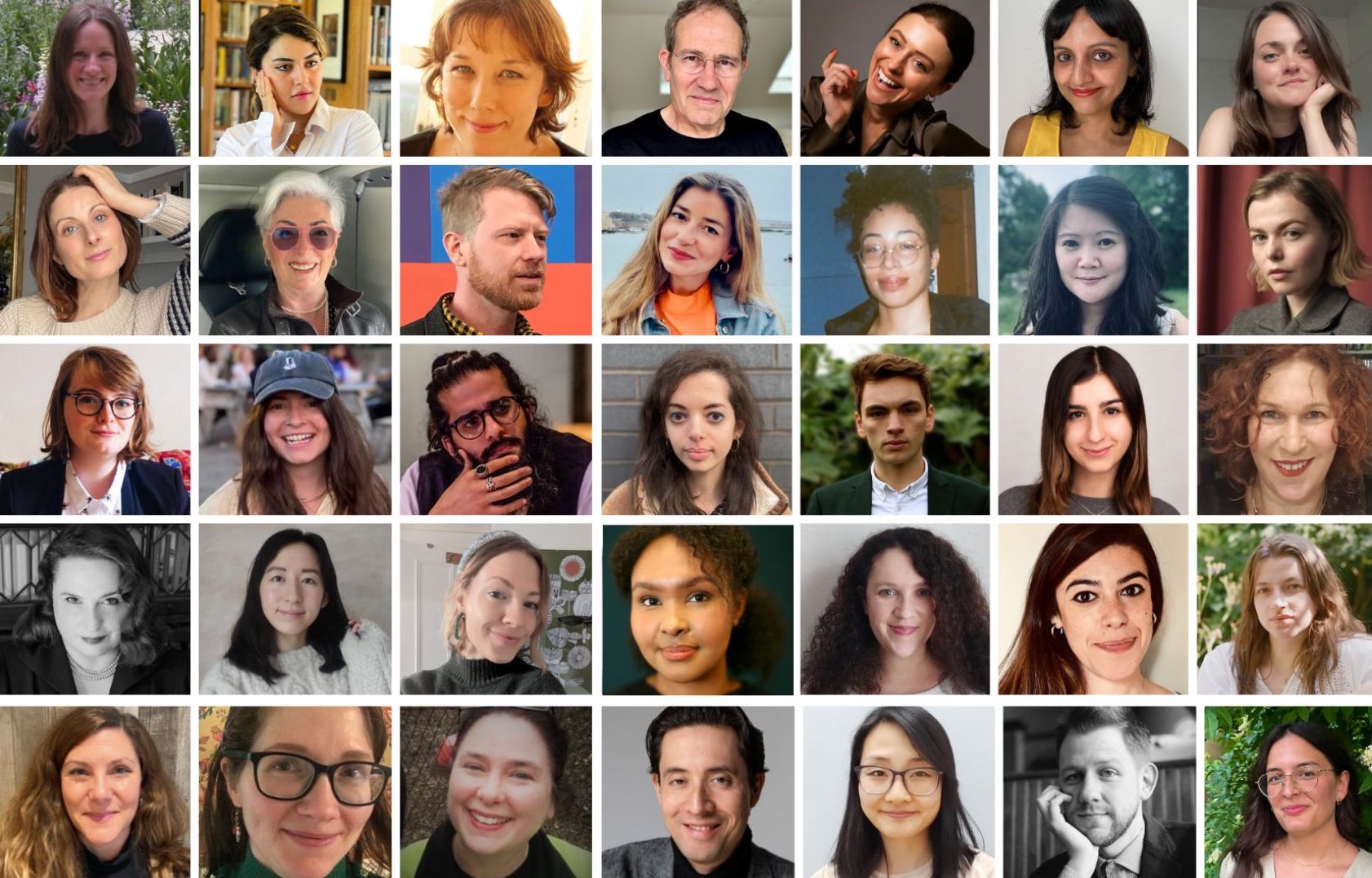
The 40 writers on the 2023/24 London Library Emerging Writers Programme worked on projects spanning memoirs, food, stage, screen and translation, fiction and non-fiction.
The candidates were selected from a field of almost 1,400 applicants, a record-breaking number, by a panel of judges comprising, poet and playwright Caroline Bird, screenwriter and playwright Moira Buffini, non-fiction writer Travis Elborough, novelist and short story writer Zoe Gilbert, novelist Ayisha Malik, and literary agents at Aitken
Their anthology, From the Silence of the Stacks, New Voices Rise Vol.V, is now available as an ebook and to buy in print from our online shop.
Shop Anthology V
Read the 2023/24 New Voices Rise anthology:
The 2023/24 Emerging Writers Cohort:
AD Aaba Atach is a media and communication strategist, with a background in politics and human rights. A Clarendon Scholar at the University of Oxford, she studies the contemporary Middle East. She was a finalist for the #MerkyBooks and Penguin Random House UK's New Writers' Competition in 2019. @IAmAnaDiamond
Sara Aghlani is an Indian Iranian artist living in London. Her background is in film and television. Recently she has undertaken various illustration courses and is currently developing a collection of poetry. Instagram: @saltypheasant
Dr Noga Applebaum is a Jewish writer and lecturer specialising in children’s literature. She is twice winner of the London Writers Short Story competition and has published a monograph on representations of technology in young adult fiction. She is working on a YA novel set in the Hasidic community.
Carole Aubrée-Dumont is a France-born writer living in Brighton. Her memoir-in-progress was shortlisted in the Mslexia Memoir Competition 2020. It is the story of how the diagnosis of her son’s speechlessness made her confront the silences in her French family. Instagram: @caroleaubreedumont
Jess Barnfield works in audio publishing and lives in South London. Originally from the Midlands, she has lived and studied in Paris, Edinburgh and Cambridge. She was highly commended for the Bridport Prize First Novel Award in 2022 and is currently working on her first novel. Instagram: @jkbfield
Olga Braga is a playwright and screenwriter. She also does stand-up comedy, having performed at some of London’s most popular comedy clubs including Backyard Comedy, Top Secret, the Comedy Store, Camden Comedy Club and Vauxhall Comedy Club. Instagram: @olga__braga. Twitter: @OlgaBraga6
Rachael Li Ming Chong is a writer, teacher and social entrepreneur. In 2022 she received a Let Teachers SHINE Award, and a Literature Matters Award from the Royal Society of Literature. She is a winner of The Poetry Archive’s Word View 2021 Competition and a graduate of the HarperCollins Author Academy. Twitter: @rhubarbpostcard
Louise Conniss is from Yorkshire and studied History at Newcastle University. She now lives in London and is writing a middle-grade series where malevolent fairies bring chaos to Victorian London.
James Cornwell is a Cambridge literature graduate. He has worked in the centre of British Government, which has in no way informed his novel, a satirical whodunnit set in Chequers.
Nicole Davis is a freelance creative producer, podcaster and writer. She commissions short films for BFI NETWORK, moderates events and panels, and recently produced the storytelling anthology podcast ‘Never Told’ with Brock Media. She lives in London. Twitter: @stonecoledfox
Yiota Demetriou is a third-generation British Cypriot multimedia artist, educator, writer, and multisensory designer. Her award-winning artwork, which explores the intersection of technology, art, and human connection, has been exhibited across the EU, featured on BBC Radio, and in the Bookseller. She is writing creative non-fiction about the experiences of Cypriot women in the diaspora. Twitter: @yiota_demetriou. Instagram: @interactive_storytelling / @sapiopetrichor
William Yamaguchi Dobson is a recovering barrister, full-time dad and husband, and writer of middle-grade fiction. He is working on a funny action-adventure series set in an alternate feudal Japan and has been shortlisted for The Bath Children’s Novel Award. He also writes stage plays and screenplays. Twitter: @WYDobson1
Timothy Fox is originally from Texas. He received a Houston Press Theatre Award for his play The Whale; or, Moby-Dick and a Vault Festival Spirit Award for his play The Witch’s Mark. His writing has appeared in, among others, Gordon Square Review, Passengers Journal, Funicular Magazine and New Writing Scotland. Twitter: @timothy_fox_ Instagram: @timothy_fox_
Chris Fite-Wassilak is a writer and critic. He is a contributing editor of ArtReview, a regular contributor to e-flux Criticism and Art Monthly, and his essays have appeared in The Quietus, Vittles, and The Microbiopolitics of Milk (Sternberg, 2023). Twitter: @cfitewassilak
Maryam Garad is a British-Somali actor and writer from London. Her writing explores belonging and the nuances of marginalisation. She was part of Omnibus Theatre’s Engine Room, where she performed the beginning of her debut play REPARATIONS. She is a recipient of Bush Theatre's Bloom Bursary and part of Soho Theatre's Writer's Lab. Twitter: @maryamgarad_
Yanita Georgieva is a Bulgarian poet and journalist. She received the Out-Spoken Prize for Page Poetry and is a member of the Southbank New Poets Collective. You can find her work in The London Magazine, Poetry Wales, bath magg, and her debut pamphlet is forthcoming with Broken Sleep in 2024. Twitter: @georgievayani. Instagram: @yanigorgonzola
Mark Henstock has always worked in communications. For charities, he managed award-winning campaigns that raised millions of pounds for causes ranging from homelessness to international development. He is writing non-fiction around the themes of history, probability and destiny. He lives in London. Twitter: @MarkHenstock1
Marissa Mireles Hinds is a poet, filmmaker, writer, curator, artist, founder of Creative Until Death and co-founder of Babes in Development. She featured in the Dazed x Circa's Class of 2022 for her short film climate change but make it (pop!). In 2022, she won Out-Spoken’s Best Poetry in Film Award and the Bergstrom Studio Writers Grant. Twitter: @sanseriif. Instagram: @sanseriif
Margaret Morrison worked in corporate information before spending many years immersed in confectionery. She’s been a freelance translator for five years in commercial work but is increasingly moving into literary translation. Her interests include French, comic books, French comic books, genre literature and foraging. @mmmtranslation
Georgia Myers is a fiction writer from Hackney, whose short stories have been published by Influx Press and longlisted for the Mslexia prize. Previously, she studied Art History, worked at the BBC, and taught creative writing. She is currently writing a quirky historical novel.
Esmé Hicks is a born and bred Londoner and filmmaker. She co-produced All My Friends Hate Me (2021) and has worked in production on features such as Femme (2023) and The End We Start From (in post-production). She is now focussing on creating her own work.Twitter: @EsmeHicks.Instagram: @esmelarissa
Preeti Jha is an award-winning reporter. She worked as a political journalist for the BBC and a foreign correspondent for Agence France-Presse, before going freelance to write about democracy, gender, and civil resistance. After a decade in Asia, she returned to London last year to write her first novel.Twitter: @PreetiJha
Monica Kam is a lawyer and writer from Hong Kong. She was a recipient of Spread the Word’s London Writers Award 2022. Her fiction and poetry have been shortlisted for the Comma Press 2023 Dinesh Allirajah Prize and commended by Ambit Magazine. Monica is currently completing a collection of short stories set in Hong Kong.Twitter: @kam_monica.Instagram: @monicakam
Rosie Kellett is a theatre, TV and food writer from Derbyshire. She has predominantly worked in theatre, with her first play Primadonna selected for the 2016 VAULT Festival, London. After ten years of working in the food industry as a chef, baker and project manager, she is now developing her first cookbook proposal.Twitter: @rosieakellett.Instagram: @rosiekellett
David Lowe works in London at an in-house creative agency. He’s a lover of all things monstrous and magical and is currently writing his first fantasy novel.
Lia Martin is an English-Romanian writer from London. She has worked in state secondary schools for a decade and recently graduated from Birkbeck with an MA in Creative Writing. In 2022, she was shortlisted for the Bridport and longlisted for the Brick Lane short story prizes She is currently working on a polyphonic novel.Twitter: @liaesthermartin
Ellen McAteer is a poet and songwriter. They won a Waterstones Refugee Week poetry competition, a BBC Download songwriting competition, and completed a Goldsmiths MA in Creative and Life Writing. Their work explores women's voices, alcoholism, and psychogeography and their pamphlet Honesty Mirror has been published by Red Squirrel Press.Twitter: @ellenmcateer.Instagram: @ellenmcateerpoet.Facebook: /ellenmcateer
Avril Millar is an engineer, physicist, businesswoman, board advisor and writer. She has changed careers five times, but always with the core value of making a difference, and still works full-time at 71. She is mother to two grown-up children, one a retired professional sportsman, the other a successful CEO, and grandmother to three.Twitter: @avrilmillar.Instagram: @Avrilmillarofficial / @avrilmillar
Helena Pickup is writing a non-fiction book on luxury, power and catastrophe. After a first degree in History at Oxford University and a Masters in Art History, she trained as a curator and has lectured at Sotheby’s Institute of Art for over ten years. Helena also writes historical and fantasy fiction.
EJ Robinson is a London-based writer of fiction with degrees in Theatre and Victorian History. Her work pinballs between magical realism for children and historical fiction for adults. She has lived in England, Ireland and Japan, and is working on a middle-grade series that draws from global folklore.Twitter: @AiRobinson
Lydia Sabatini is a London-based playwright and screenwriter originally from Essex. She was part of the Bush Theatre’s Emerging Writers Group 2021/22, the Traverse Theatre’s Breakthrough Writers: In Residence Programme 2022/3 and the Mercury Theatre’s Playwrights scheme 2022/3. She will be using this programme to develop film screenplays.
Kumyl Saied is a British-Arab Screenwriter who studied at the NFTS in 2022. His writing portfolio consists of feature films that explore longing, grief and mental illness. Family dysfunction serves as the glue that holds Kumyl's work together, be it through blood splattered horror or intimate drama.Instagram: @kayzone93
Molly Pepper Steemson is a writer and sommelier from London. She is the author of Very Short, a Substack series of 100 100-word stories. Her work is mostly concerned with food, drink, adultery, viscera and, occasionally, death.Twitter: @SteemsonMolly.Instagram: @molly.pepper.steemson
Madeline Heather Stephens did an English degree and a Masters degree in Renaissance Literature, at York. She has worked in fundraising and political campaigning for charities. An admirer of comic fiction, she hopes to write a novel that will make people laugh.
Stacey Taylor is a writer from Cardiff. She has an MA in English and Creative Writing and loves reading and writing in different genres. She was recently longlisted for the Penguin Michael Joseph Undiscovered Writers’ Prize. She is currently working on a YA novel.
Helena Tebeau grew up in Warsaw, Poland. She studied English at Swarthmore College in the US and received her MSc in Behaviour Economics from LSE. Living in London, she now works in life sciences consulting and translates Polish literature, exploring the subversion of femininity and motherhood in modern day interpretations of folklore and fairytales.Instagram: @helenaclairexx
Catherine Wilson Garry is a poet and writer based in Edinburgh. Her debut poetry pamphlet, Another Word for Home is Blackbird, was recently published by Stewed Rhubarb Press. Her writing has been published by organisations including Extra Teeth magazine, The Scotsman, BBC Radio 4 and The British National Gallery.Twitter: @CWilsonPoet.Instagram: @CWilsonPoet.Website: cwilsonpoet.co.uk
Tian Yi lives in London and writes weird short stories about families and hauntings. She has received support from the Mendocino Coast Writers’ Conference and Hedgebrook. She graduated with an MA in Creative Writing from Birkbeck, where she was awarded a Sophie Warne Fellowship.Twitter: @tianyiwriting
Subcategories
 Latest News
 Inside The Library
 History of The London Library
 Public Tours
 Members Past and Present
 The London Library Team
 AGM and Annual Reports
 Patrons, Presidents and Trustees
 Emerging Writers Programme
 London Library Podcast
- London Library Partners
 London Library Ambassadors
- The Capital Campaign: Building Connections
 Subsidised Schools Membership Programme
- Shop