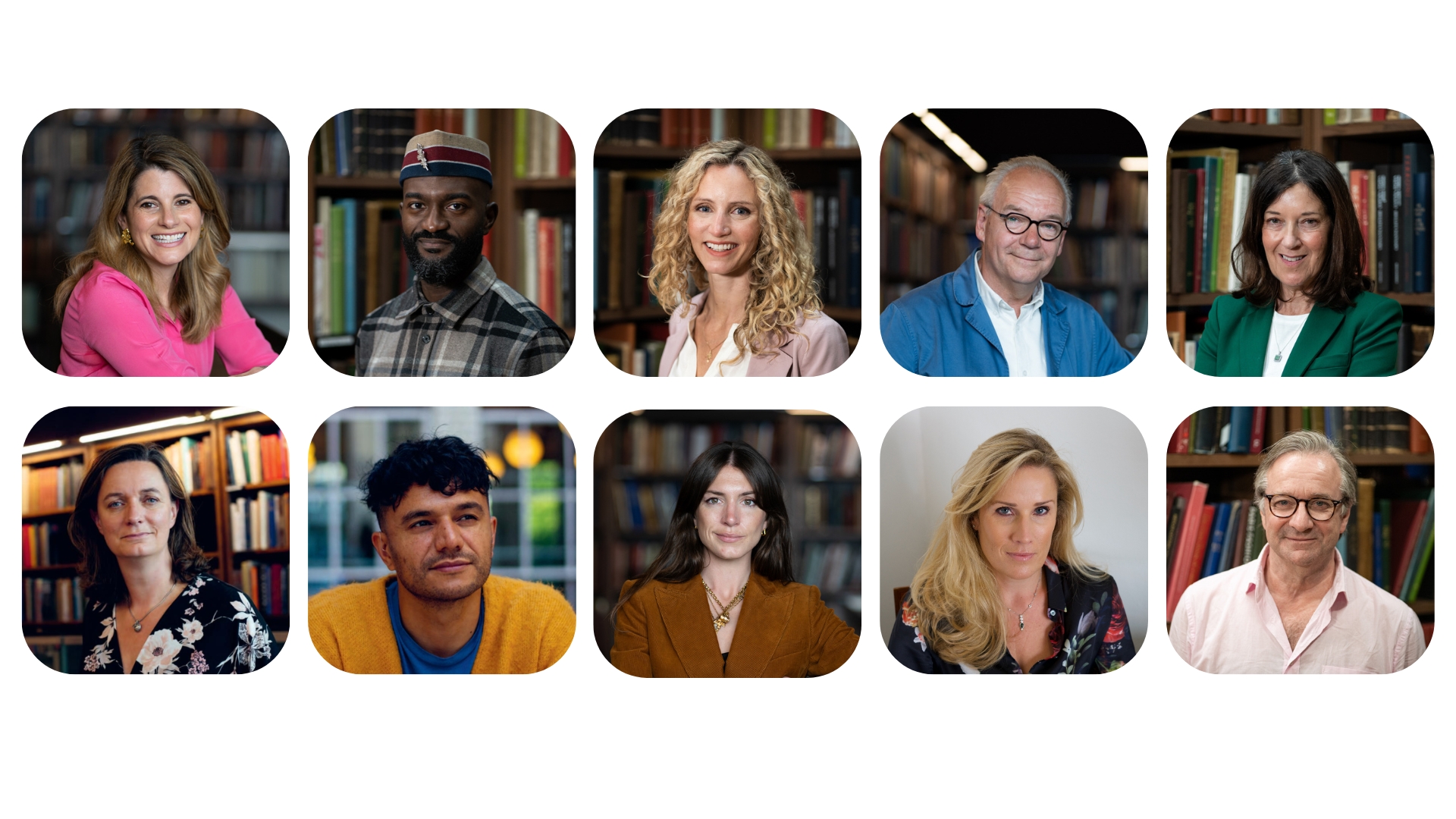
Cosy up with reading recommendations this winter from our London Library Ambassadors, Harriet Evans, Rachel Holmes, Suzannah Lipscomb, John O'Farrell, Neil Pearson and Charles Saumarez Smith. Titles range from 19th Century gothic horror to a debut exploring modern womanhood, intertwined with fairytales and myths. Explore most titles available on Catalyst.
Harriet Evans
About a year ago at my mother’s extremely jolly birthday party old family friend of my parents' recommended The Transylvanian Trilogy by Miklós Bánffy. I did not retain this information, in part due to the fact Banffy's name was unknown to me but also let’s be honest due to the jolliness of the party. But last weekend a friend came to visit and happened to mention she’d absolutely raced through They Were Counted, the first in the trilogy and I remembered the conversation of the previous summer, went out and bought it (in a beautiful new reissued jacket) the same day. Gosh I am enjoying it so much. It’s set in Hungary at the turn of the last century, a world full of ideals, art, young people, lavish parties and castles and old-fashioned customs. It’s spry and sharp and vast at the same time, rather like the Forsyte Saga and I am racing through it. It’s the perfect book to curl up with at Christmas and I am impatient to start Book 2.
Rachel Holmes
On Cats by Doris Lessing
‘Human and cat, we try to transcend what separates us.’ Doris Lessing’s On Cats abounds beguiling characters - Grey Cat, El Magnifico and Rufus The Survivor; but as every feline knows, this clear eyed and unsentimental curl-up-and-read-in-a-single-sitting classic is about the human longing to share a language.
Suzannah Lipscomb
Richard Flanagan’s Question 7 – a moving and urgent combination of memoir, history, biography and musings on life. It is a book that has changed me.
Laura Cumming’s Thunderclap – part memoir, part exquisitely written meditation on the 17th-century Dutch art and the act of seeing. A glorious book.
Both unfurl with such skill that one is left gasping on the last pages.
And, finally, if I just wanted to sink into an old and familiar novel, I’d return to C.S. Lewis, The Voyage of the Dawn Treader or Dorothy L. Sayers’, Gaudy Night.
John O’Farrell
Hero by Katie Buckley
I read this because Kate had been one of the emerging writers at The London Library that I had met when she was on the programme. It's a book about a young woman getting a lot of grief from men as she decides whether or not to accept a proposal of marriage – intertwined by all the myths and fairy tales of women being imprisoned, rescued etc. A really impressive debut which I really enjoyed it although I think it might aimed at much younger people than me!
Mrs Palfrey at the Claremont by Elizabeth Taylor
I feel I was a long way behind everyone else in discovering Elisabeth Taylor - maybe I thought people were talking about the actress, and I just couldn’t picture it. Anyway, this is my favourite of hers, which I reread recently. A wonderfully evocative, humorous and sad book about a woman living out her final years in a West London hotel. Funnier than it sounds!
The Story of a Heart by Rachel Heart
A very powerful recent non-fiction hit that deserved all the acclaim it received. As well as an interesting bit of history about how heart transplants were achieved (including a rather macho race to be first) this wonderful book follows the heart of a young girl who was killed in a road accident, as it is offered for transfer to another child. If you can read this book without tears streaming down your cheeks, you are made of much stronger stuff than me.
H is For Hawk by Helen MacDonald
I just saw the wonderful film adaptation of this and it reminded me what a great book it was. A memoir that seems to be about over-coming grief and depression (by acquiring and training a massive goshawk) but it’s really a book about love.
Nuclear Family by Kate Davies
This is a pacy, funny, high-stakes story of a couple of women trying to start a family – all about donor conceived babies, IVF, genes, parents – 400 pages but it didn’t sag at all – and I was actually quite moved by it in places. I read it because I met Kate at last year's London Library Christmas Party and now she has become a friend! That’s just one of the things I love about The London Library.
Neil Pearson
The Beetle by Richard Marsh
An Egyptian.....man? woman? insect?....holes up in darkest 1890s Hammersmith, in search of sacrificial victims -- and revenge...
A cornerstone of late-Victorian weird fiction, The Beetle was published in 1897 -- the same year as Dracula -- and outsold Stoker's soon-to-be classic by six to one. Wintry, troubling, and best read alone in a room with a quietly ticking clock, The Beetle's opening chapters are among the creepiest in the genre. (It comes as no surprise to discover that Marsh was the grandfather of Robert Aickman, master of the 'strange tale'.)
Bad news: The Beetle is out of print. Good news: The London Library has copies. Get one now. NOW!
Charles Saumarez Smith
Jonathan Keates recommended that I should read Patrick McGuiness's Ghost Stations: Essays and Branchlines (CB editions, 2025). It is perfect Christmas reading - thoughtful, reflective, full of ideas and so beautifully written. Then, I am pleased that Duncan Robinson's Mellon lectures, Pen and Pencil: Visual and Literary Culture in Georgian England have been handsomely published by Pallas Athene. I read the typescript and now look forward to reading the published version. If you want to understand the battles over social housing in the late 1960s, I strongly recommend Holly Smith, Up in the Air: A History of High-Rise Britain, an investigation of what the residents thought of tower blocks when they were first built; a longer read, but still rewarding are the essays in Simon Gunn, Peter Mandler and Otto Saumarez Smith (eds.), The Modern British City 1945-2000 (Lund Humphries, 2025).